About Aqua Armor
Industrial-Grade Protection for Aquatic Structures
Development
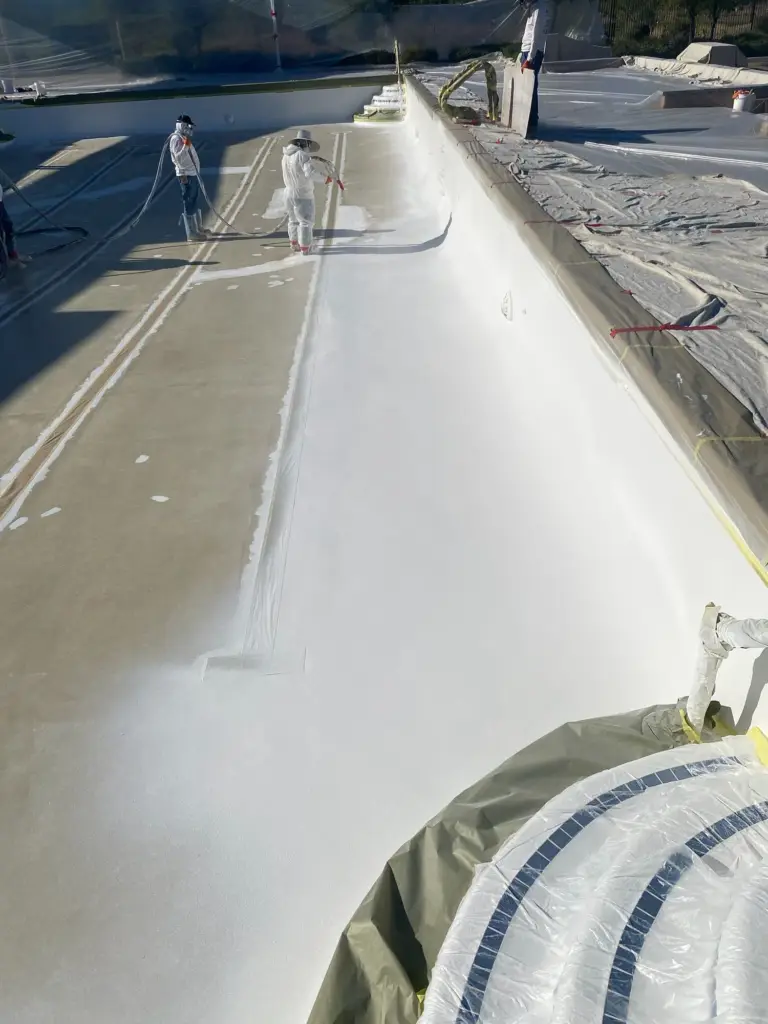
- 30+ years of industrial protective coatings
- Carbon steel, stainless steel, and concrete rehabilitation
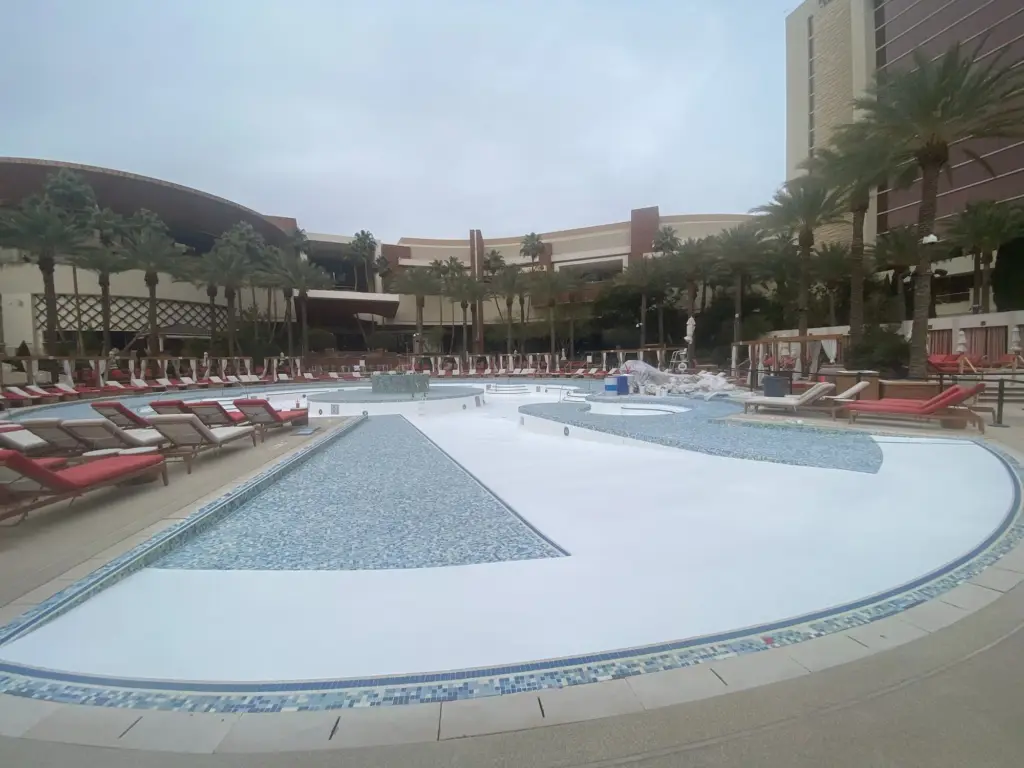
- Adapted for commercial pools/spas/water parks
- Unique heavy-duty industrial-grade solution
Reducing Operating Costs with Aqua Armor
- Startup after application is less costly and time-consuming, making water balancing easier, and requires fewer pool visits.
- No brushing and induction period needed.
- The renovation process delivers a short downtime, and rapid return-to-service.
- No loss of revenue due to extended downtime.
- No costly, cumbersome chip out and disposal of old plaster is required. Saving time and money on eliminating this function.
- The metals and minerals found in fill water will not stain or discolor the surface, as it is a dense, hard material; unlike cement-based products that are porous. Furthermore, the surface is not affected by dust storms, that stain plaster and compromise aesthetics.
- As the surface is inert, it does not interact with the water chemistry, therefore less chemicals are used. As chemicals are more efficient, chemical reductions of 30–40% have been observed. Cement-based surfaces are not inert, are pervious and interact with the water chemistry.
- The surface is not sensitive to out-of-balance water chemistry and pH swings. Untreated water will not damage the surface.
- The surface does not promote the formation of calcium salts, and the roughness it induces.
- The material is designed for high bather loads and heavy use.
- In hot commercial spas, the surface stays in pristine condition, and maintains a clean, inviting look. Never a loss of aesthetics and repeated resurfacing, like using cement-based products.
- The initial investment offers an excellent ROI, as Aqua Armor eliminates periodic resurfacing operations, that are common with plaster and epoxy pool paints.